
In the early hours of June 28, 1969, a woman named Stormé DeLarverie was unjustly handcuffed, arrested, and imprisoned. Eyewitness accounts report that she suffered police brutality, being bashed on the head by a baton-wielding officer while physically restrained after she voiced concerns that her handcuffs were too tight. While she was only one of many people treated that way by law enforcement that night, Stormé’s unjust arrest and public humiliation became a pivotal moment in the fight for gay rights. The events of that night ignited the Stonewall uprising and changed the course of LGBTQIA+ history.
It’s no exaggeration to say that those of us queer people who can walk the streets today without fearing police brutality owe Stormé DeLarverie and those like her for the freedom we now enjoy.[1]
It’s no exaggeration to say that those of us who have chosen to confide our orientation/gender identity in our loved ones owe people like DeLarverie for the fact that we can do so without risking imprisonment or the loss of our jobs.
If that’s something the people reading this no longer have to fear, it’s because of the sacrifice of those who came before us. It’s because of our queer ancestors who gave their lives, who suffered bodily violence and incarceration so that those who came after them wouldn’t have to.
At the heart of Pride is the theme of sacrifice. Since the first Pride march in 1970, marking the one-year anniversary of the Stonewall uprising, Pride has commemorated the sacrifices of queer ancestors.
And the longer I looked at this picture of sacrifice, the more I notice subtle images that resemble the gospel story. In our queer history, I see a picture of sacrifice that not only gives up something immensely valuable like one’s own life or safety, but a specific vision of sacrifice that gives that up as a substitute for another. It’s a picture of sacrifice that takes someone else’s place behind those prison bars, that puts your own life on the line so that those who come after you won’t have to.
Jesus said it himself “Greater love has no one than this: to lay down one’s life for one’s friends.” (John 15:13).
This Pride I’ve been looking for opportunities to integrate my queer cultural heritage with my Christian faith, and it’s not hard to see the parallels with this one. The gospel story, or at least the version of it we normally tell in the modern Western church, is replete with imagery of being viewed as criminals facing imprisonment and the death penalty, in need of someone to come and substitute themselves in our place.
And what I’ve found is that the more I’ve connected with my own community’s history, the more it’s given me new images, vivid images that help me reconnect with the Bible’s imagery.
As a fairly privileged male Westerner, the concept of ‘sacrifice’ has always felt a bit abstract to me. Parents make ‘sacrifices’ and work hard so their kids can have a better life. Or an employee might ‘salary sacrifice’ to put aside some of the instant gratification of their income to save some money in the long run. But using that language of ‘sacrifice’ to describe the gospel story has never resonated that strongly with me. Certainly it didn’t capture the life-altering significance of Jesus’ incarceration and murder.
But as I’ve reconnected with LGBTQIA+ history and realised that I’m only separated from that world by a couple of generations, the idea of facing literal, steel-prison-bar imprisonment and bodily violence from law enforcement makes some of this imagery feel less metaphorical. In a very real sense, I should be standing in that place if it were not for the queer ancestors who traded places with me.[2]
A few months ago at another Queer Worship Night, we explored the story of the Ethiopian eunuch of Acts 8, and what struck me was the way the eunuch would have resonated with the Old Testament text he was reading in far more than a metaphorical sense. I’ve come to read Isaiah 53 with fresh eyes as I wonder how how it would have felt for this foreign, enslaved eunuch who had experienced bodily mutilation at the hands of powerful captors to read the same passage.
I wish I knew how the same passage might have felt for Stormé DeLarverie too, or Marsha P. Johnson or Sylvia Rivera. I wish I knew how they might connect with a God who knew incarceration and police violence.
4 Surely he took up our pain
Isaiah 53:3-6
and bore our suffering,
yet we considered him punished by God,
stricken by him, and afflicted.
5 But he was pierced for our transgressions,
he was crushed for our iniquities;
the punishment that brought us peace was on him,
and by his wounds we are healed.
6 We all, like sheep, have gone astray,
each of us has turned to our own way;
and the Lord has laid on him
the iniquity of us all.
For me, reading Scripture freshly through these eyes creates less emotional distance between me and the text. It invites me in to sit a little closer to the suffering one in the text and to wince sympathetically as I picture each lashing inflicted on this suffering friend.
Because that should have been me.
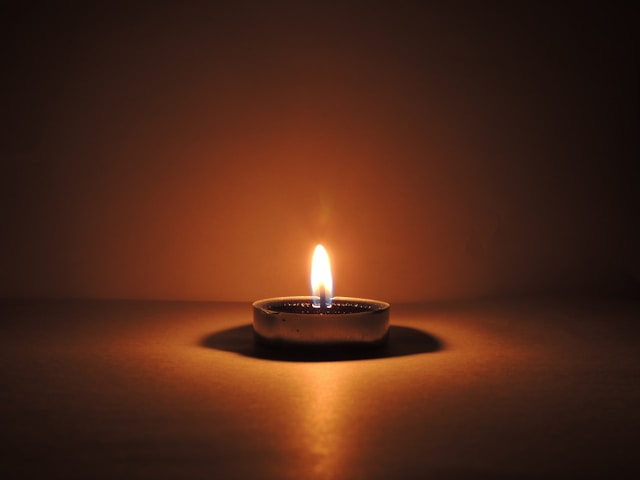
This Pride I’ll light a candle to commemorate the lives that came before me.
I’ll blow out the candle, remembering the flames that were extinguished too soon.
And in that minute of silence, I’ll say a prayer for these sacrifices: let the vividness of this imagery connect me more deeply to the sacrifice of my saviour.
Because that was my place he took.
[1] This is not to say Stormé DeLarverie is a faultless role model or even a saviour figure. I don’t think we need to think so literalistically to find meaningful resonances.
[2] To the extent that this feels hard to believe because one feels such relative safety in today’s world, that in itself demonstrates how effective the sacrifice of our queer forebears has been.
I’m also conscious that even now in 2024, many queer people globally still face the same dangers that are now considered historical in my country, including criminalisation in 64 countries and the death penalty in 12 countries.

 Singled Out